
Mantras of a Tea Bowl
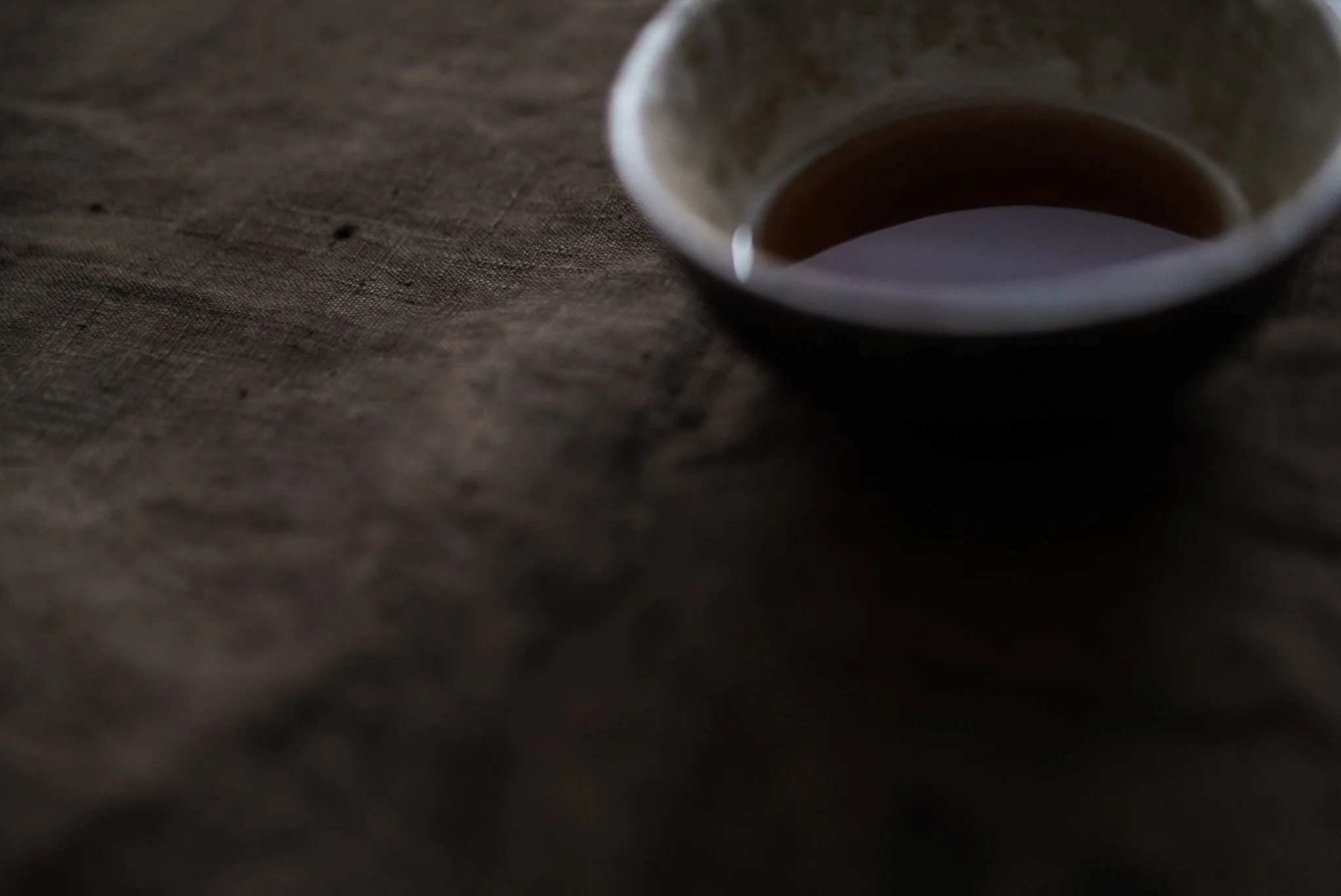
There is something quietly humbling about a tea bowl.
It does not ask to be admired.
It does not compete for attention.
It simply holds.
Warmth. Stillness. Presence.
In Japanese tea ceremony, the bowl is more than an object. It becomes part of a ritual that invites us back into awareness. The texture of the clay. The uneven glaze. The warmth in your hands. The pause before the first sip.
A tea bowl teaches through experience. Through silence. Through simplicity.
In many ways, it reflects the essence of wabi-sabi: the quiet beauty of imperfection, impermanence, and enoughness.
These mantras were inspired by that spirit. Not as affirmations to perform, but as contemplations to return to when life feels loud, fast, or overfilled.
Small reminders to soften.
To simplify.
To receive.
I AM OPEN TO RECEIVE.
I hold nothing tightly. Yet everything flows through me.
A tea bowl remains open.
It does not cling to what was poured before. It does not resist what arrives next.
There is wisdom in loosening our grip on life. So much exhaustion comes from trying to control outcomes, hold certainty, or force clarity before it is ready.
But openness creates movement.
Like water, life flows more easily through what does not resist it.
I AM RECEPTIVE.
I welcome life as it is — the bitter, the sweet, and the in between.
Tea is never only one flavour.
Some days feel light and expansive. Others feel uncertain, heavy, unfinished.
Wabi-sabi does not ask us to avoid these moments. It asks us to meet them fully.
To remain present with life as it is, rather than constantly reaching for a different version of it.
Receptivity is not passive.
It is trust.
I AM STILLNESS IN MOTION.
Like steam rising — present, quiet, alive.
Stillness is often misunderstood as inactivity.
But stillness exists inside movement too.
Steam rises. Seasons change. Water cools. Thoughts pass.
And still, something deeper remains grounded beneath it all.
A tea ceremony moves slowly not because nothing is happening, but because everything is being noticed.
Stillness is awareness within motion.
I AM WHOLE IN EMPTINESS.
Even when I feel poured out — I remain enough.
The usefulness of a tea bowl comes from its emptiness.
Without space inside it, nothing could be received.
Yet many of us fear emptiness. We interpret it as failure, loneliness, or lack.
Zen philosophy offers another perspective: emptiness is potential. Space is sacred.
You do not lose your worth in moments of exhaustion, transition, or uncertainty.
An empty bowl is not broken.
It is ready.
I AM HONOURING MY CAPACITY.
I only hold what I have room for — with care and intention.
A bowl can only hold so much before it spills.
The same is true for us.
Modern life often rewards overextension. More output. More productivity. More consumption. But wisdom is knowing your capacity and respecting it before burnout arrives.
Not every opportunity needs to be accepted.
Not every space needs to be filled.
There is care in restraint.
I AM AT EASE WITH CHANGE.
As the tea cools, I welcome what comes next.
Nothing remains warm forever.
Tea cools. Light shifts. Seasons move quietly into one another.
Impermanence is not something separate from life — it is life itself.
Wabi-sabi teaches us to find beauty not despite change, but within it.
To soften into transition instead of resisting it.
To trust that endings and beginnings often arrive together.
A Quiet Practice
You do not need to practice tea ceremony to learn from a tea bowl.
You only need to slow down enough to notice.
The warmth of a cup in your hands.
The silence before the morning begins.
The pause between thoughts.
The feeling of being fully present for one small moment.
Perhaps this is the deeper invitation of tea.
Not escape.
Not perfection.
Not performance.
Only presence.
One sip at a time.